

Introduction
Automation and robotics continue to reshape modern industries. Companies now use smart machines and intelligent systems to improve productivity, accuracy, and operational efficiency. From manufacturing plants to hospitals and warehouses, businesses increasingly depend on automated technologies to stay competitive in fast-changing industries.
Many people confuse automation with robotics, but both technologies serve different purposes. Automated tasks require little human intervention for completion, whereas robotics encompasses the utilization of machines that function either physically or digitally. Together, they help companies improve efficiency, reduce operational costs, and create safer work environments.
This guide explains how automation and robotics work, why companies invest in them, different types of systems, real-world applications, and future trends.
What Are Automation and Robotics?
Automation uses technology to perform repetitive tasks. Robotics focuses on designing and operating machines that can perform tasks independently or alongside humans. Various enterprises merge these technologies to develop more advanced workflows and optimize their operations.
The Difference Between Automation and Robotics
Automation handles processes and workflows. Robotics is concerned with machines that carry out physical tasks.
For example:
- A software bot that processes invoices uses automation.
- A robotic arm assembling car parts uses robotics.
Many industries combine both systems for better results.
| Feature | Automation | Robotics |
| Main Focus | Process execution | Physical task execution |
| Human Interaction | Minimal | Partial or collaborative |
| Examples | RPA software, workflow tools | Robotic arms, cobots |
| Industries | Finance, healthcare, retail | Manufacturing, logistics |
How Modern Robotics Systems Work
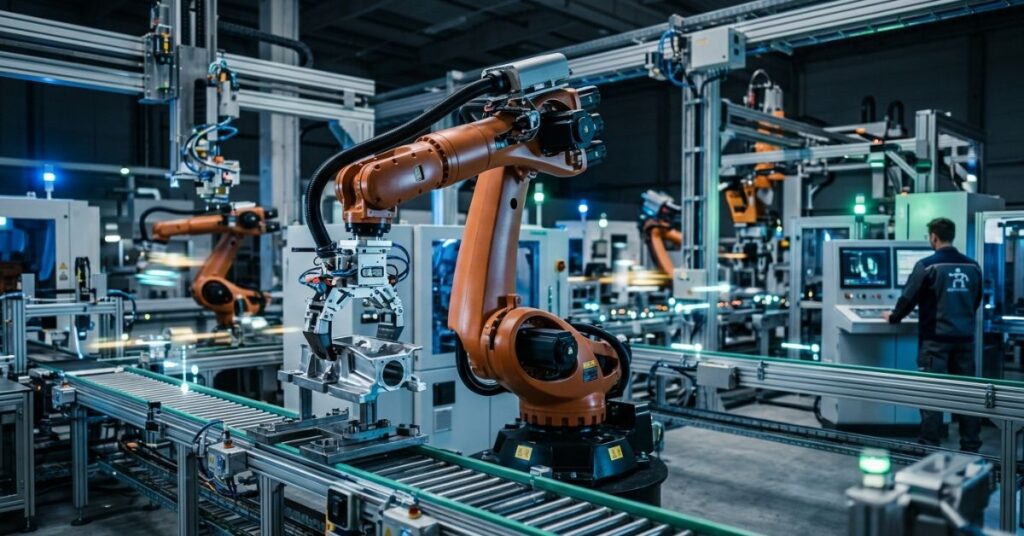
Modern robotic systems rely on sensors, software, machine vision, and AI to perform tasks efficiently. These technologies allow robots to detect surroundings, analyze data, make decisions, perform repetitive tasks, and work safely with humans. Industrial robots often connect with factory management software to improve coordination and productivity.
The Role of AI in Automation
AI facilitates robotic systems in making quicker decisions and adjusting to evolving circumstances. Artificial intelligence helps robots recognize patterns, predict issues, and improve performance in real time.
Businesses now use AI-driven robotics for:
- Predictive maintenance
- Quality inspection
- Autonomous navigation
- Smart scheduling
- Data-driven production planning
Why Businesses Invest in Automation and Robotics
Companies invest in automation because it improves efficiency and lowers long-term operating costs.
Rising Labor Costs and Productivity Demands
Companies face increasing labor expenses and higher customer expectations. Automation allows companies to increase production without significantly raising labor expenses. Factories now use collaborative robots (cobots) and autonomous mobile robots to handle repetitive work more quickly and consistently.
How Automation Improves Accuracy and Efficiency
Manual errors can slow production and create unnecessary waste. Robotics systems deliver:
- Higher precision
- Faster production cycles
- Lower downtime
- Better product consistency
Smart factory automation also improves inventory tracking and workflow coordination.
Common Business Problems Robotics Can Solve
Businesses use automation and robotics to solve operational challenges such as:
- Production bottlenecks
- Inventory management issues
- Worker safety concerns
- Delayed deliveries
- Quality control inconsistencies
Industries Leading the Automation Revolution
Several industries lead the robotics engineering trend, including: Manufacturing, Logistics, Automotive, Healthcare, Agriculture, Retail, and Electronics. Industry 4.0 technologies continue to drive automation adoption across these industries.
Types of Automation and Robotics Systems
Companies use different automation systems depending on their operational needs.

Industrial Robots
Industrial robots handle repetitive manufacturing tasks like welding, painting, assembly, and packaging. These systems increase production speed and help reduce workplace injuries.
Collaborative Robots (Cobots)
Cobots work safely alongside human employees. Unlike traditional robots, cobots include advanced sensors and safety controls. Small and medium-sized businesses often choose cobots because they are more affordable and easier to deploy.
Autonomous Mobile Robots
Autonomous mobile robots transport materials and inventory with minimal human involvement.
Warehouses use these robots for:
- Order picking
- Inventory transport
- Shelf scanning
- Route optimization
Robotic Process Automation (RPA)
Robotic process automation handles digital tasks instead of physical labor.
RPA software automates:
- Data entry
- Invoice processing
- Customer service workflows
- HR management
- Report generation
AI-Powered Smart Automation Systems
AI-powered systems combine robotics, machine learning, and analytics to improve operational efficiency. These systems can predict maintenance issues and improve production efficiency automatically.
Best Automation Technologies by Industry and Use Case
| Industry | Best Automation Technology | Common Use Case |
| Manufacturing | Industrial robots | Assembly lines |
| Warehousing | Autonomous mobile robots | Inventory movement |
| Healthcare | AI robotics systems | Surgical assistance |
| Retail | Smart automation kiosks | Customer service |
| Agriculture | Farming robotics | Crop monitoring |
| Finance | RPA software | Invoice automation |
Real-World Examples of Automation and Robotics
Real-world applications show how automation improves efficiency across different industries.
Automation in Manufacturing
Manufacturing plants use robotic systems to improve production speed and maintain product quality.
Case Study: Factory Production Improvement
A mid-sized electronics factory introduced robotic systems into its assembly department.
Before Automation
- Production time: 10 hours per batch
- Error rate: 8%
- Downtime: Frequent manual delays
After Automation
- Production time: 6 hours per batch
- Error rate: 2%
- Productivity increase: 40%
The company used robotic arms, machine vision systems, and AI-powered monitoring software.
Robotics in Warehousing and Logistics
Warehouse automation systems now handle inventory tracking, packaging, and transportation.
Large logistics companies use autonomous mobile robots to reduce delivery delays and improve order accuracy.
Healthcare Robotics Applications
Automation in healthcare continues to grow rapidly.
Hospitals use robotics for:
- Surgical assistance
- Patient monitoring
- Medicine delivery
- Lab automation
AI-driven systems also help improve diagnostic accuracy.
Retail and Customer Service Automation
Retail companies use automation for:
- Self-checkout systems
- AI chatbots
- Smart inventory management
- Personalized recommendations
These tools help retailers serve customers faster while reducing pressure on staff.
Agriculture and Farming Robotics
Modern farming robotics supports: Crop monitoring, Automated irrigation, harvesting assistance, and soil analysis. Farmers now use automated technologies to improve productivity and reduce resource waste.
Recommended: Best Realistic Robot Cats: Smart AI Pets That Feel Almost Real
Benefits and Challenges of Automation and Robotics
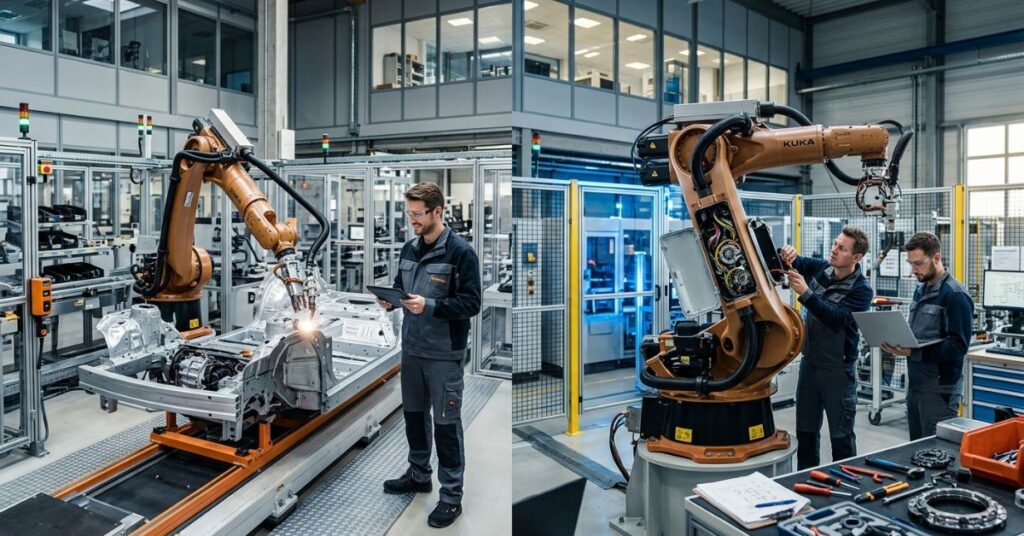
Automation provides major business benefits, but successful implementation still comes with challenges.
Major Benefits for Businesses
Modern automation systems offer several advantages for businesses.
Key benefits include:
- Lower operational costs
- Higher production speed
- Better quality control
- Improved workplace safety
- Reduced downtime
- Scalable operations
Common Automation Risks and Challenges
Despite the benefits, companies often face challenges like: High initial investment, complex integration, technical maintenance requirements, and resistance from employees. Companies need a clear automation strategy before implementation.
Cybersecurity and Safety Concerns
Connected automation systems increase cybersecurity risks. Organizations must secure: Factory networks, IoT devices, robotics software, and cloud-based automation tools. Safety protocols also protect workers during robot-human collaboration.
Workforce Impact and Employee Training
Automation is changing job responsibilities rather than completely replacing workers.
Businesses should invest in:
- Robotics training
- Technical education
- Process management skills
- AI system supervision
Top Benefits vs Challenges of Robotics Automation
| Benefits | Challenges |
| Faster production | High setup cost |
| Better accuracy | Employee resistance |
| Reduced waste | Integration complexity |
| Improved safety | Cybersecurity risks |
| Scalable operations | Maintenance costs |
How to Implement Automation and Robotics Successfully
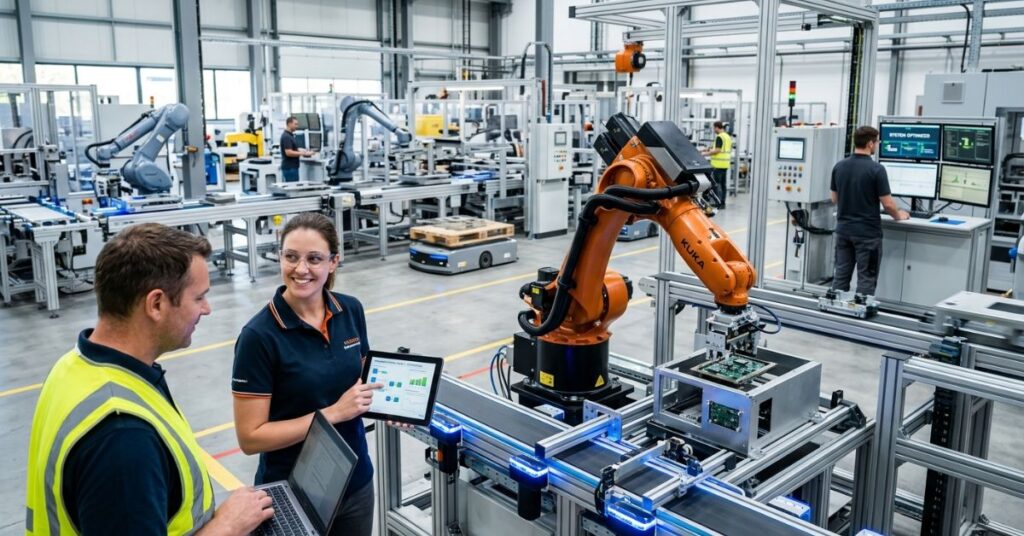
Successful implementation requires proper planning, testing, and ongoing improvement.
How to Identify Processes for Automation
Businesses should automate tasks that: Repeat frequently, require high accuracy, consume excessive labor time, and create workflow bottlenecks. Process audits help identify the best automation opportunities.
Budget Planning and ROI Estimation
Before investing, businesses should calculate:
- Equipment costs
- Software expenses
- Maintenance fees
- Training costs
- Productivity gains
Simple ROI Framework
| Factor | Example |
| Initial investment | $100,000 |
| Annual labor savings | $45,000 |
| Downtime reduction savings | $20,000 |
| Estimated ROI period | 18–24 months |
Choosing the Right Robotics Technology
Before selecting a system, companies should evaluate:
- Scalability
- Software compatibility
- Safety features
- AI capabilities
- Vendor support
The best solution depends on a company’s goals and operational requirements.
Integration With Existing Systems
Automation systems should connect smoothly with: ERP platforms, Manufacturing execution systems, Inventory software, and Cloud analytics tools. Proper integration helps reduce workflow disruptions.
Mistakes Companies Should Avoid
Common implementation mistakes include: Automating broken processes, ignoring employee training, investing in low-quality systems just to reduce upfront costs, and failing to test workflows properly
Automation Readiness Checklist
Before implementation, businesses should confirm:
- Clear automation goals
- Budget approval
- Technical support availability
- Employee training plans
- Cybersecurity measures
- ROI expectations
Automation and Robotics Trends Shaping the Future
Advances in AI and smart technologies continue to reshape the future of automation and robotics.
AI and Machine Learning Integration
Machine learning allows robotics systems to improve performance over time through data analysis and pattern recognition. AI-driven systems now support predictive decision-making in many industries.
Smart Factories and Industry 4.0
Industry 4.0 automation connects machines, sensors, and analytics into one intelligent ecosystem.
Smart factories use:
- Real-time monitoring
- Digital twins
- Cloud automation
- Predictive maintenance
Human-Robot Collaboration
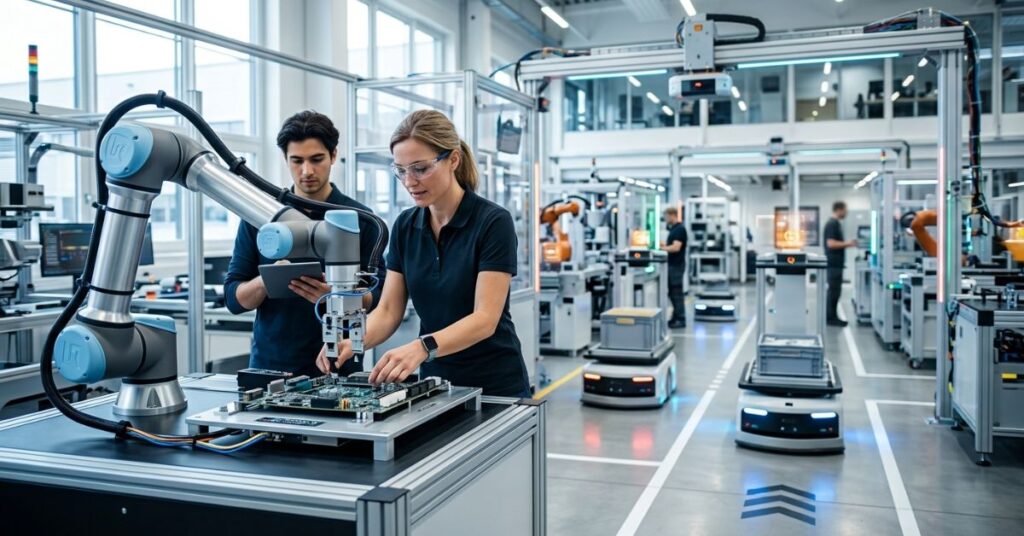
Cobots are becoming more common because they help workers complete tasks safely and efficiently. Human-robot collaboration helps companies improve productivity while keeping workflows flexible.
Sustainable and Energy-Efficient Robotics
Modern robotics companies now focus on:
- Energy efficiency
- Reduced waste
- Sustainable manufacturing
- Smart resource management
Sustainable automation solutions help companies reduce waste and meet environmental goals.
Future Job Opportunities in Robotics
The robotics industry creates new career opportunities, including Robotics engineering, AI programming, Automation consulting, Machine learning operations, and Industrial maintenance. Technical and AI-related skills will become even more important in future industries.
Best Automation and Robotics Tools and Companies
Choosing the right automation platform requires careful evaluation of features and long-term support.
Leading Industrial Robotics Brands
Popular robotics companies include:
- ABB
- FANUC
- Siemens
- KUKA
- Yaskawa
- Mitsubishi Electric
These brands provide industrial robots, cobots, and automation software.
Top Automation Software Platforms
Businesses commonly use:
- UiPath
- Automation Anywhere
- Blue Prism
- Siemens TIA Portal
- Rockwell Automation Studio
These platforms support robotic process automation and industrial workflows.
Best Robotics Solutions for Small Businesses
Small businesses often prefer:
- Affordable cobots
- Cloud automation tools
- Low-code RPA platforms
- Modular robotics systems
These solutions provide flexibility without requiring major infrastructure investment.
How to Compare Automation Vendors
Companies can compare vendors based on: Technical support, Scalability, Industry experience, Integration capability, Security standards, and long-term maintenance services.
Automation Vendor Comparison Table
| Vendor | Specialty | Best For |
| ABB | Industrial robotics | Manufacturing |
| FANUC | Robotic arms | Automotive production |
| UiPath | RPA software | Office automation |
| Siemens | Smart factory systems | Industry 4.0 |
| KUKA | Collaborative robotics | Flexible production |
FAQs
What industries use robotics the most?
Manufacturing, logistics, healthcare, automotive, agriculture, and retail industries use robotics extensively.
Is automation expensive for small businesses?
Cloud-based automation tools and affordable cobots have made automation much more accessible for small businesses.
Will robotics replace human workers?
Robotics will change many job roles, but businesses still need human workers for decision-making, creativity, supervision, and technical management.
What skills help in robotics careers?
Skills in AI, PLC programming, machine learning, software engineering, data analysis, and robotics integration help professionals succeed in robotics careers.
How long does automation implementation take?
Implementation timelines vary based on project complexity. Small automation projects may take weeks, while large industrial deployments may require several months.
Conclusion
Globally, automation and robotics are transforming industries. Companies now use advanced automated systems and robotics to improve productivity, reduce costs, and stay competitive in rapidly evolving industries.
Companies that plan carefully and invest wisely can achieve significant long-term benefits through automation. Even small businesses can start with affordable cobots or workflow automation tools before scaling larger systems.
The future of automation and robotics will include smarter factories, better human-robot collaboration, and more advanced AI systems. Businesses that adapt early will gain a significant competitive advantage in the years ahead.

Qasim Ali is a Lead AI Solutions Architect and the founder of TechyPulse, with over 12 years of experience in enterprise digital transformation. Holding an MSc in Computer Science, he specializes in making Artificial Intelligence, Cybersecurity, and Machine Learning accessible and scalable. Qasim is dedicated to decoding complex neural networks into actionable insights for the modern technical landscape.