

Introduction
Machine learning spend analysis uses artificial intelligence to examine procurement and purchasing data. It helps organizations categorize spending, identify patterns, and uncover savings opportunities automatically. Instead of relying on manual spreadsheets and time-consuming reviews, procurement teams can use machine learning to gain faster and more accurate insights into their spending.
Many businesses collect thousands of procurement transactions every month, yet they still struggle to understand where their money goes. Hidden costs, duplicate suppliers, and inconsistent data often prevent teams from making informed decisions. As procurement becomes more complex, organizations need smarter tools that can turn raw data into actionable intelligence.
This guide explains how AI-driven spend analytics works, why businesses adopt it, and how procurement teams can use it to improve performance.
What Is Machine Learning Spend Analysis?
Machine learning spend analysis uses artificial intelligence algorithms to analyze procurement and purchasing data automatically. These systems identify patterns, categorize spending, detect anomalies, and generate actionable insights without relying on extensive manual effort.
Unlike conventional procurement spend analysis, machine learning continuously learns from historical transactions and improves its accuracy over time.
How Traditional Spend Analysis Works
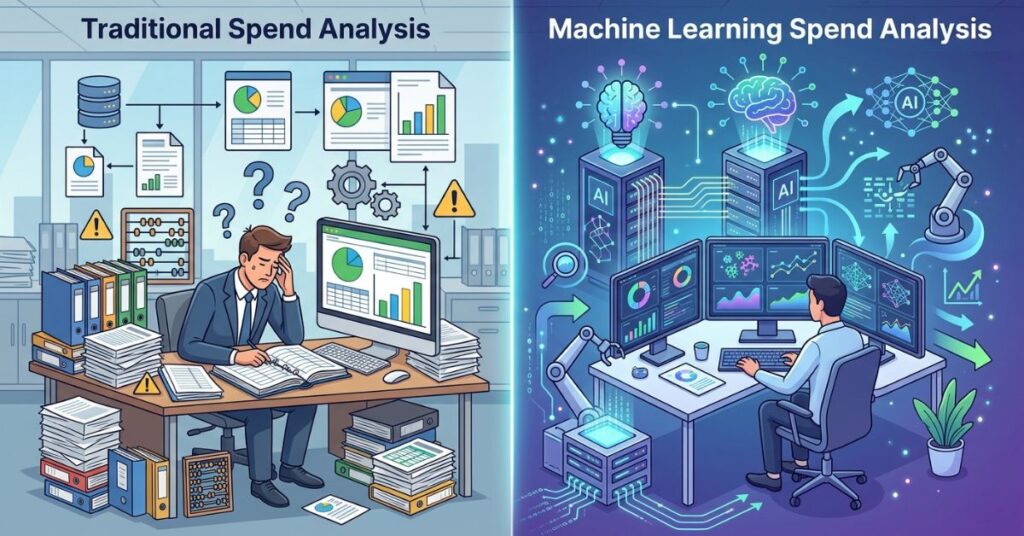
Traditional spend analysis typically follows a manual workflow. Procurement teams collect data from ERP systems, supplier invoices, purchasing platforms, and finance systems. They then clean, categorize, and analyze the data manually.
While this approach can produce useful insights, it often creates several challenges:
- Data preparation consumes significant time.
- Classification errors reduce reporting accuracy.
- Teams struggle to analyze large datasets efficiently.
- Reports become outdated quickly.
As procurement complexity grows, manual methods become increasingly difficult to maintain.
How Machine Learning Changes Procurement Analytics
Machine learning automates many of the activities that previously required manual intervention. Instead of manually assigning categories to thousands of transactions, ML spend classification models identify patterns and classify purchases automatically. The system can also recognize supplier naming variations, flag unusual spending behavior, and forecast future procurement needs.

As a result, procurement teams gain faster insights and better visibility across the entire purchasing process.
Core Components of an ML-Powered Spend Analysis System
A modern AI-powered spend analysis platform typically includes:
| Component | Primary Function |
| Data Cleansing Engine | Removes duplicates and standardizes records |
| ML Classification Model | Categorizes spending automatically |
| Supplier Analytics Module | Consolidates supplier information |
| Predictive Analytics Engine | Forecasts future spending trends |
| Anomaly Detection System | Identifies unusual procurement activities |
Together, these components create a comprehensive spend intelligence ecosystem.
Why Organizations Struggle with Spend Visibility
Many businesses possess large amounts of procurement data but lack complete spend visibility.
Fragmented Procurement Data
Procurement information often resides across multiple systems. ERP platforms, accounts payable software, sourcing tools, and supplier databases frequently operate independently. This fragmentation prevents procurement leaders from obtaining a unified view of spending activities.
Manual Spend Classification Challenges
Manual classification introduces inconsistencies. Different employees may assign the same transaction to different categories, creating reporting inaccuracies and reducing confidence in procurement analytics.
Supplier Data Quality Issues
Supplier names often appear in multiple formats.
For example, one supplier might appear as:
- ABC Technologies
- ABC Tech Ltd
- ABC Technologies Inc.
Without supplier normalization, organizations struggle to understand their true supplier concentration and spending patterns.
Hidden Cost-Saving Opportunities
Many procurement teams miss significant savings opportunities because manual analysis cannot easily identify spending trends across millions of transactions. Machine learning helps uncover these hidden opportunities by analyzing procurement data at scale.
How Machine Learning Spend Analysis Works
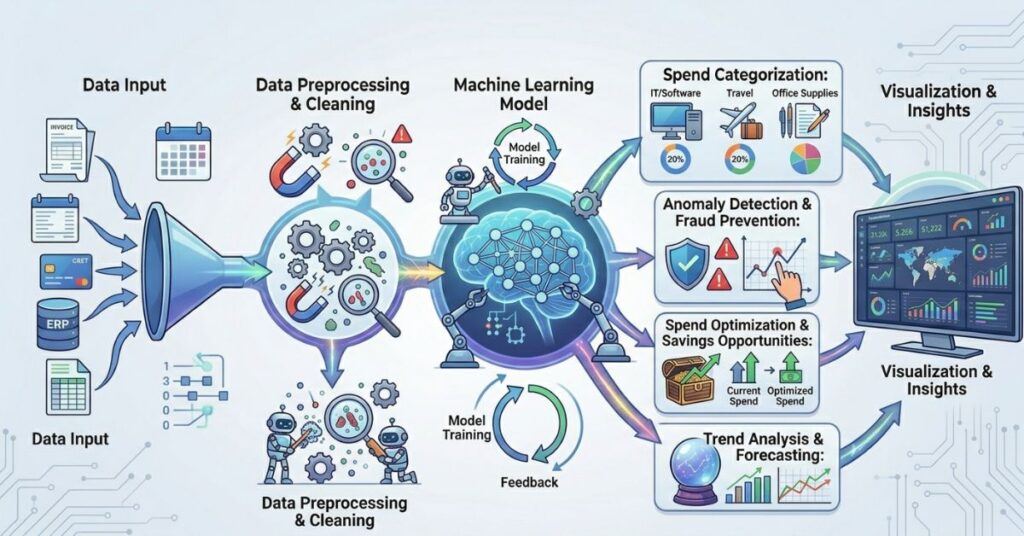
Machine learning spend analysis follows a structured process that transforms raw procurement data into actionable insights.
Data Collection and Cleansing
The process begins by gathering procurement data from multiple sources. Organizations collect information from purchase orders, invoices, contracts, supplier databases, and finance systems. The platform then standardizes formats, removes duplicates, and corrects inconsistencies. High-quality data forms the foundation of successful procurement analytics.
Automated Spend Categorization
Spend categorization using machine learning represents one of the most valuable applications of AI in procurement. The system analyzes transaction descriptions, supplier information, purchasing history, and contextual data to classify purchases automatically. This capability dramatically reduces manual effort while improving consistency.
Supplier Identification and Matching
Machine learning models identify supplier naming variations and consolidate records into a single supplier profile. This process improves supplier spend analytics and helps procurement teams understand their actual supplier landscape.
Anomaly Detection and Fraud Monitoring
Advanced algorithms continuously monitor spending behavior. When the system detects unusual purchasing activity, duplicate invoices, contract violations, or unexpected spending spikes, it alerts procurement teams immediately. This capability supports stronger governance and risk management.
Predictive Spend Forecasting
Historical procurement data contains valuable indicators about future spending behavior. Machine learning models analyze purchasing trends, seasonal patterns, supplier activity, and business requirements to generate more accurate forecasts. These insights support budgeting and strategic sourcing decisions.
Key Benefits of Machine Learning in Spend Analysis
Businesses increasingly adopt machine learning procurement analytics because it delivers measurable business value.
Faster Data Processing
Manual spend analysis projects often take weeks to complete. Machine learning systems process millions of records within hours, allowing procurement teams to access insights much faster.
Improved Spend Accuracy
Automated classification improves consistency across procurement datasets. Many organizations achieve significantly higher classification accuracy after implementing machine learning models compared to manual categorization approaches.
Better Supplier Management
Supplier performance analytics become more effective when organizations maintain accurate supplier records. Procurement teams can identify supplier concentration risks, evaluate supplier performance, and strengthen sourcing strategies.
Cost Reduction Opportunities
Machine learning helps organizations discover opportunities for:
- Supplier consolidation
- Contract compliance improvements
- Volume discounts
- Demand management
These improvements often generate substantial procurement savings.
Real-Time Procurement Insights
Traditional reports often provide a historical view of spending. Machine learning platforms deliver real-time spend intelligence, allowing procurement leaders to respond quickly to emerging trends.
Enhanced Compliance Monitoring
Companies can continuously monitor procurement activities against contracts, policies, and regulatory requirements. This visibility reduces compliance risks and strengthens governance.
Recommended: Machine Learning Studio: Build Smarter AI Models Faster
Real-World Applications of Machine Learning Spend Analysis
Practical examples demonstrate how machine learning spend analysis creates measurable value.
Manufacturing Industry Example
A global manufacturer struggled with fragmented procurement data across multiple facilities. After implementing machine learning spend analysis, the organization consolidated supplier records, improved spend visibility, and identified duplicate suppliers.
The initiative reduced maverick spending and generated measurable sourcing savings within the first year.
Healthcare Procurement Optimization
A healthcare network analyzed over one million procurement transactions using machine learning. The analysis revealed supplier overlap across hospitals and identified opportunities to standardize purchasing agreements. The organization improved contract compliance and reduced procurement costs without affecting patient care.
Retail Spend Intelligence Success Story
A large retailer used predictive procurement analytics to improve inventory-related purchasing decisions. The system identified seasonal demand patterns and optimized supplier selection strategies. Procurement teams reduced unnecessary purchases while maintaining product availability.
Lessons Learned from Enterprise Deployments
Successful implementations often share several characteristics: Companies focus on data quality, involve procurement stakeholders early, establish clear objectives, and continuously monitor model performance. These practices improve adoption rates and maximize long-term value.
The SMART Spend Intelligence Framework
Organizations seeking a structured implementation approach can follow the SMART Spend Intelligence Framework.
| SMART Stage | Purpose |
| Source Data Collection | Gather procurement information from all systems |
| Machine Learning Classification | Automate spend categorization |
| Anomaly Detection | Identify irregular spending patterns |
| Risk Evaluation | Assess supplier and procurement risks |
| Tactical Optimization | Implement savings and efficiency initiatives |
This framework helps organizations move from raw procurement data to actionable business outcomes.
Machine Learning Spend Analysis vs Traditional Spend Analysis
Accuracy Comparison
Machine learning systems continuously learn from historical procurement data and improve classification performance over time. Traditional methods often depend on manual review and remain vulnerable to human error.
Scalability Comparison
Manual processes struggle to keep pace with rapidly growing datasets. Machine learning models scale efficiently across millions of procurement transactions.
Resource Requirements
Traditional analysis requires substantial analyst effort. Machine learning reduces repetitive tasks and allows procurement professionals to focus on strategic initiatives.
ROI and Business Impact
Procurement leaders often realize value through improved visibility, reduced procurement costs, stronger compliance, and more effective supplier management. The combination of efficiency gains and cost savings creates a compelling business case.
Implementing Machine Learning Spend Analysis in Your Organization
Define Procurement Objectives
Businesses should begin by identifying specific goals. These goals may include improving spend visibility, reducing costs, increasing contract compliance, or strengthening supplier performance management.
Prepare and Standardize Spend Data
Data quality directly influences model performance. Companies should clean supplier records, standardize categories, and eliminate duplicate information before implementation.
Select the Right Analytics Platform
The ideal platform should integrate with existing procurement systems while supporting automation, predictive analytics, and reporting capabilities.

Train and Validate ML Models
Teams should train machine learning models using historical procurement data and validate performance against known outcomes. Regular testing ensures ongoing accuracy.
Measure Performance and Improve Continuously
Firms should monitor classification accuracy, savings generation, supplier insights, and user adoption. Continuous improvement helps maintain long-term success.
Measuring ROI and Business Value
Measuring results helps justify investment and guide future improvements.
Procurement KPIs to Track
Procurement teams commonly monitor:
- Spend under management
- Contract compliance
- Supplier consolidation
- Procurement cycle times
- Classification accuracy
Cost Savings Calculation Methods
Savings calculations often include negotiated reductions, supplier consolidation benefits, compliance improvements, and avoided spending. A structured methodology improves reporting credibility.
Supplier Consolidation Metrics
Reducing supplier fragmentation often leads to stronger negotiations and improved purchasing leverage. Procurement teams should track supplier counts and concentration ratios over time.
Long-Term Value Creation
The greatest value often emerges beyond immediate cost reductions. Improved decision-making, better forecasting, stronger supplier relationships, and increased procurement agility contribute to long-term business performance.
Before-and-After Spend Analysis Dashboard Walkthrough
Before machine learning implementation, procurement data often contains duplicate suppliers, inconsistent categories, and incomplete records.
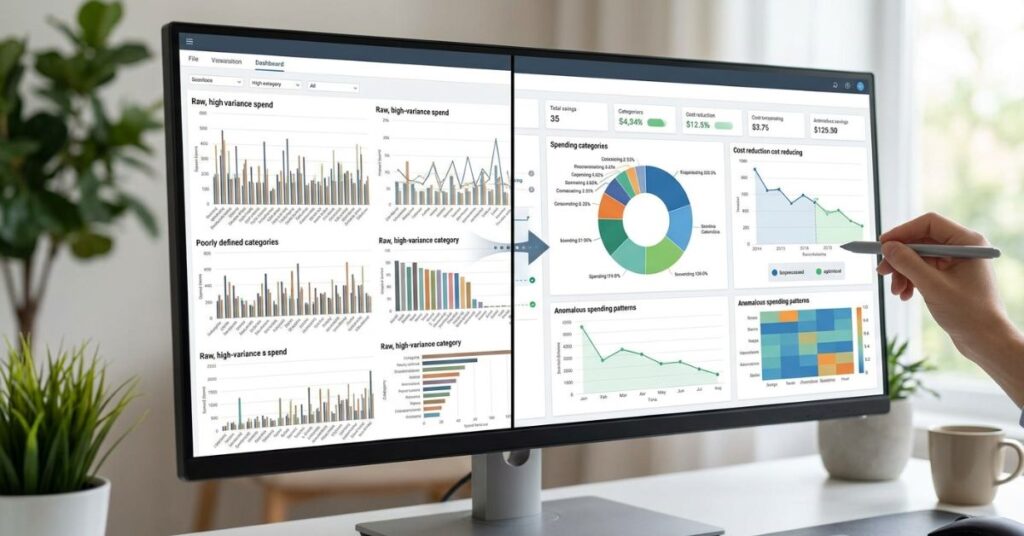
After cleansing and classification, procurement leaders gain:
- Accurate spend categories
- Consolidated supplier views
- Risk alerts
- Forecasting insights
- Executive-level dashboards
This transformation allows organizations to move from reactive reporting to proactive procurement management.
Common Mistakes to Avoid
Using Poor-Quality Data
Even the most advanced machine learning models cannot compensate for inaccurate data. Businesses should prioritize data quality from the beginning.
Ignoring Change Management
Technology alone does not guarantee success. Procurement teams need training, stakeholder engagement, and clear communication throughout implementation.
Overlooking Model Monitoring
Machine learning models require ongoing evaluation. Firms should monitor performance regularly and retrain models when necessary.
Focusing Only on Cost Reduction
Cost savings matter, but organizations should also consider supplier risk, compliance, resilience, and long-term procurement effectiveness.
Future of Machine Learning Spend Analysis
Procurement technology continues to evolve rapidly. Organizations no longer use machine learning only for spend categorization and reporting. Modern procurement teams increasingly rely on AI to support strategic decision-making, supplier risk management, and demand forecasting.
Real-Time Procurement Intelligence
Future spend analytics platforms will process procurement data continuously rather than through periodic reporting cycles. This capability will help organizations identify risks, spending anomalies, and savings opportunities as they emerge.
Advanced Supplier Risk Monitoring
Machine learning models will combine internal procurement data with external market signals, financial information, and geopolitical events. Procurement leaders will gain earlier visibility into supplier disruptions and supply chain risks.
Autonomous Procurement Recommendations
Future systems will not only identify opportunities but also recommend actions. Procurement teams will receive automated suggestions for supplier consolidation, contract renegotiation, sourcing alternatives, and cost optimization strategies.
Greater Integration Across Enterprise Systems
Enterprises will increasingly connect procurement analytics platforms with ERP, finance, inventory, and supply chain systems. This integration will create a unified view of organizational spending and improve decision-making across departments.
As AI capabilities mature, machine learning spend analysis will move beyond reporting and become a core driver of procurement strategy. Organizations that adopt these technologies early will gain stronger spend visibility, faster decision-making, and a significant competitive advantage.
FAQs
What Data Does Spend Analysis Require?
Most spend analysis projects use purchase orders, invoices, contracts, supplier records, accounts payable data, and ERP transaction information.
Can Small Businesses Use Machine Learning Spend Analysis?
Yes. Many modern spend analytics software platforms offer scalable solutions that support small and mid-sized organizations without requiring large data science teams.
How Accurate Are ML-Based Spend Classification Models?
Accuracy depends on data quality and model training. Well-maintained systems often achieve very high classification accuracy and continue improving as they process additional transactions.
Which Industries Benefit Most from Spend Analytics?
Manufacturing, healthcare, retail, logistics, technology, government, and financial services organizations frequently gain substantial value from procurement analytics initiatives.
What Is the Average ROI of AI-Powered Spend Analysis?
ROI varies based on procurement maturity, data quality, and spend volume. Many organizations achieve value through reduced manual effort, improved contract compliance, supplier consolidation, and procurement cost optimization.
How Long Does It Take to Implement Machine Learning Spend Analysis?
Implementation timelines vary depending on data quality, system integration requirements, and procurement complexity. Most organizations can begin generating useful insights within a few weeks, while enterprise-wide deployments may take several months.
Conclusion
Machine learning spend analysis has transformed procurement from a reporting function into a strategic intelligence capability. Organizations no longer need to rely on manual classification, fragmented data, or outdated reports to understand spending behavior.
By combining AI-powered analytics, predictive insights, supplier intelligence, and automation, procurement teams can achieve greater visibility, stronger compliance, and more informed decision-making
Organizations that invest in AI-powered spend analysis position themselves to identify savings opportunities faster, manage suppliers more effectively, reduce procurement risks, and create lasting business value. As procurement data volumes continue to grow, machine learning will play an increasingly important role in helping organizations make smarter procurement decisions.

Qasim Ali is a Lead AI Solutions Architect and the founder of TechyPulse, with over 12 years of experience in enterprise digital transformation. Holding an MSc in Computer Science, he specializes in making Artificial Intelligence, Cybersecurity, and Machine Learning accessible and scalable. Qasim is dedicated to decoding complex neural networks into actionable insights for the modern technical landscape.